Is My Child Ready for P1? What No One Tells You About School Readiness for Kids with Special Needs in Singapore
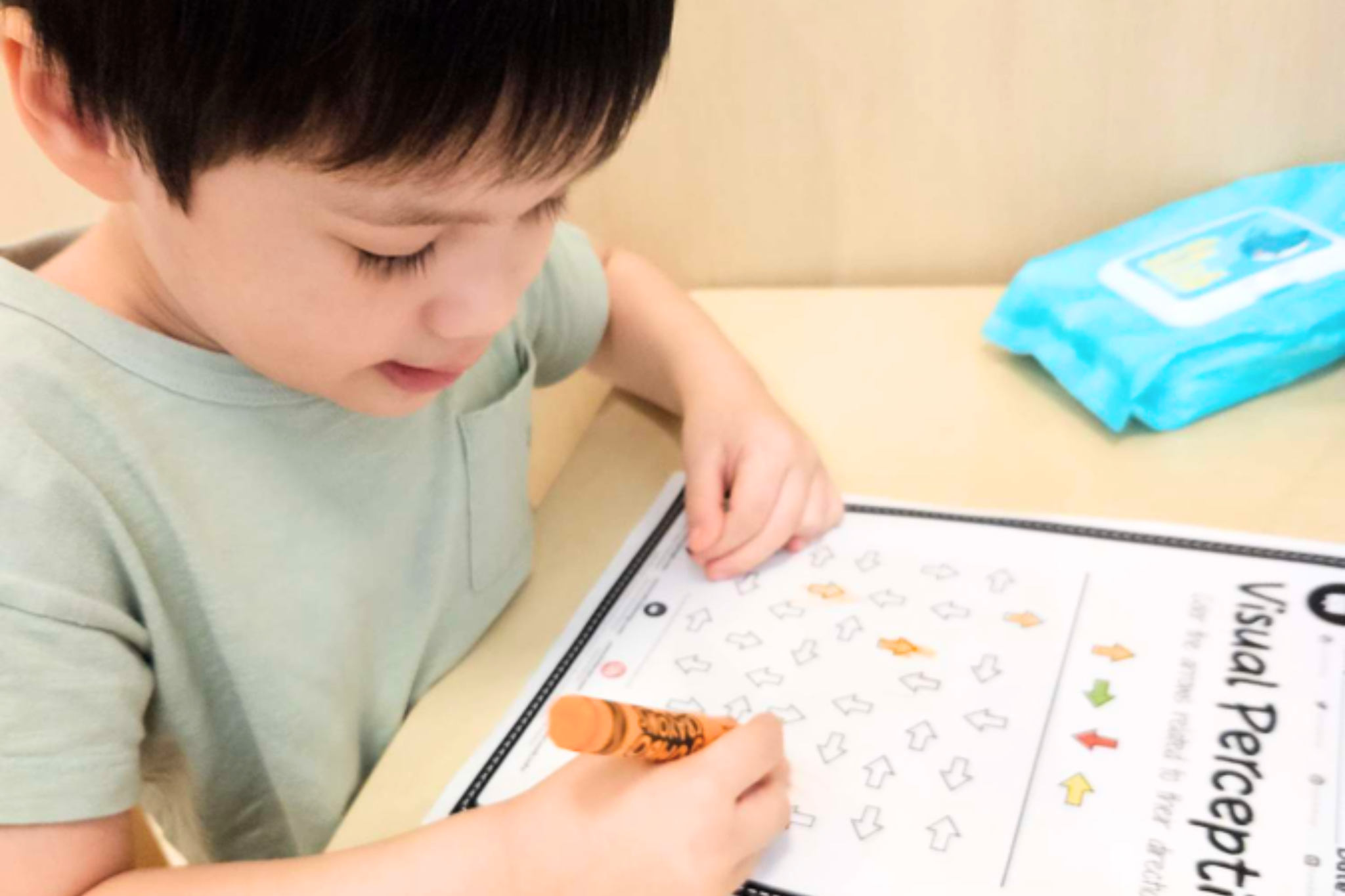
Every year around July, Singapore parents of five-year-olds enter a particular kind of collective anxiety: P1 registration season. The MOE portal opens, the phases begin, and the question that dominates every parent WhatsApp group is some version of: "Is my child ready?"
For parents of neurotypical children, "ready" usually means: can they read some words, count to twenty, hold a pencil, and sit still for a bit? For parents of children with autism, ADHD, speech delays, or sensory processing differences, the question is far more layered — and the stakes feel much higher.
Here is the honest truth that most school readiness checklists do not tell you: for a neurodivergent child, academic skills are the least of your worries. A child can know their phonics and still fall apart in a primary school canteen. They can count to a hundred and still be unable to ask a teacher for help when they are overwhelmed.
This article is for parents who are navigating that gap — and trying to figure out what "ready" actually means for their child.
The Hidden Curriculum of Primary School
When a child enters a Singapore primary school — whether mainstream or SPED — they are immediately confronted with what educators call the "hidden curriculum." These are the unspoken rules and expectations of the school environment that no one explicitly teaches, but everyone is expected to know.
Consider a typical Tuesday morning at a mainstream primary school. Your child needs to: arrive and unpack their bag independently, transition from assembly to their first lesson, sit and attend for 30 to 40 minutes at a stretch, navigate recess in a loud, crowded canteen, manage the social dynamics of group work, and then do it all again in the afternoon — all while regulating their sensory experience of a busy, unpredictable environment.
For a neurotypical child, much of this happens automatically. For a child with ADHD, autism, or sensory sensitivities, every single one of those steps requires conscious effort and learned skill. And if those skills are not in place before P1 begins, the child is not just academically behind — they are exhausted, dysregulated, and often labelled as "difficult" before the first month is out.
What True School Readiness Looks Like for a Neurodivergent Child
Rather than a checklist, think of school readiness as a set of foundational capacities. These are the areas that will determine whether your child can access learning in a primary school environment — regardless of their academic level.
Executive Functioning and Independence Can your child pack and unpack their own school bag? Can they follow a two or three-step instruction without needing it repeated? Can they start a task independently once they have been told what to do? These skills — often grouped under "executive functioning" — are the scaffolding on which all academic learning rests. A child who cannot initiate or sustain a task independently will struggle in a classroom of 30 to 40 children, no matter how bright they are.
Emotional Regulation Primary school is full of frustration, disappointment, and unpredictability. Plans change. Pencils break. Friends say unkind things. The question is not whether your child will feel overwhelmed — they will — but whether they have the tools to manage that overwhelm before it becomes a meltdown. Can they identify when they are reaching their limit? Do they have a strategy — a sensory tool, a breathing technique, a trusted phrase to say to a teacher — that helps them regulate?
Social Communication and Peer Navigation Recess is arguably the most socially demanding part of the school day. Can your child initiate play with a peer? Can they handle losing a game without a major reaction? Can they read the social cues that tell them when a group does not want to be joined? These skills do not develop automatically — they need to be explicitly taught and practised in a safe, facilitated environment.
Classroom Attending Skills Sitting at a desk and focusing on a teacher-led lesson is a learned skill, not a given. For a child with ADHD or sensory processing differences, the sensory environment of a typical classroom — fluorescent lights, background noise, the physical sensation of a chair — can be deeply distracting. Building the capacity to attend to a non-preferred task for 20 to 30 minutes is something that needs to be practised before P1, not learned on the job.
Mainstream or SPED? The Question Every Parent Dreads
One of the most emotionally charged decisions parents of neurodivergent children face is whether to pursue a mainstream primary school placement or apply to a SPED school. In Singapore, both pathways require planning well in advance.
For mainstream placement, children with special educational needs can access the Learning Support Programme (LSP) or the School-Based Dyslexia Remediation (SDR) programme, but these are not available at every school and have their own eligibility criteria. Some children are supported by a full-time Teaching Assistant (TA) in the classroom, while others manage with periodic pull-out support.
For SPED school placement, applications are submitted through MOE and require a formal assessment report. The process is separate from the mainstream P1 registration exercise, and families are encouraged to apply early as places are limited.
There is no universally right answer. The right environment depends entirely on your child's profile, their support needs, and the specific school's culture and capacity. What matters most is that the decision is made with full information — and ideally, with the guidance of the professionals who know your child best.
How to Start Preparing Now
If your child is currently aged 4 to 6 and you are thinking about P1 readiness, the most valuable thing you can do is not buy more assessment books. It is to focus on the foundational skills described above — and to practise them in a structured, supportive environment.
Simulate school routines at home. Use a visual schedule to map out the morning. Set a timer for focused activities and gradually increase the duration. Practise packing a school bag. Role-play asking a teacher for help. These small, consistent practices build the neural pathways that will carry your child through the school day.
If your child is currently in an early intervention programme or receiving private therapy, ask your team specifically about school readiness goals. Are they working on transitioning between activities? On tolerating group settings? On self-advocacy? If not, now is the time to make that a priority.
The AltSchool School Readiness Programme
At AltSchool International in River Valley, our School Readiness Programme is designed specifically for children aged 5 to 7 who are preparing for the transition to primary school — whether mainstream or SPED.
We do not just teach academics. We teach children how to learn in a group setting. Our transdisciplinary team of educators and therapists work together to simulate primary school routines within our low-ratio, supportive environment. We focus heavily on executive functioning, emotional regulation, and social navigation — the skills that will determine whether your child can access their education, not just sit in a classroom.
We also work closely with parents to think through school options honestly and practically. We have seen many children make this transition successfully, and we have also seen what happens when the environment is not the right fit. We will always give you our honest read.
P1 does not have to be a cliff edge. With the right preparation, it can be a beginning.