“Your Child Might Benefit From Early Intervention.” What Happens Next?
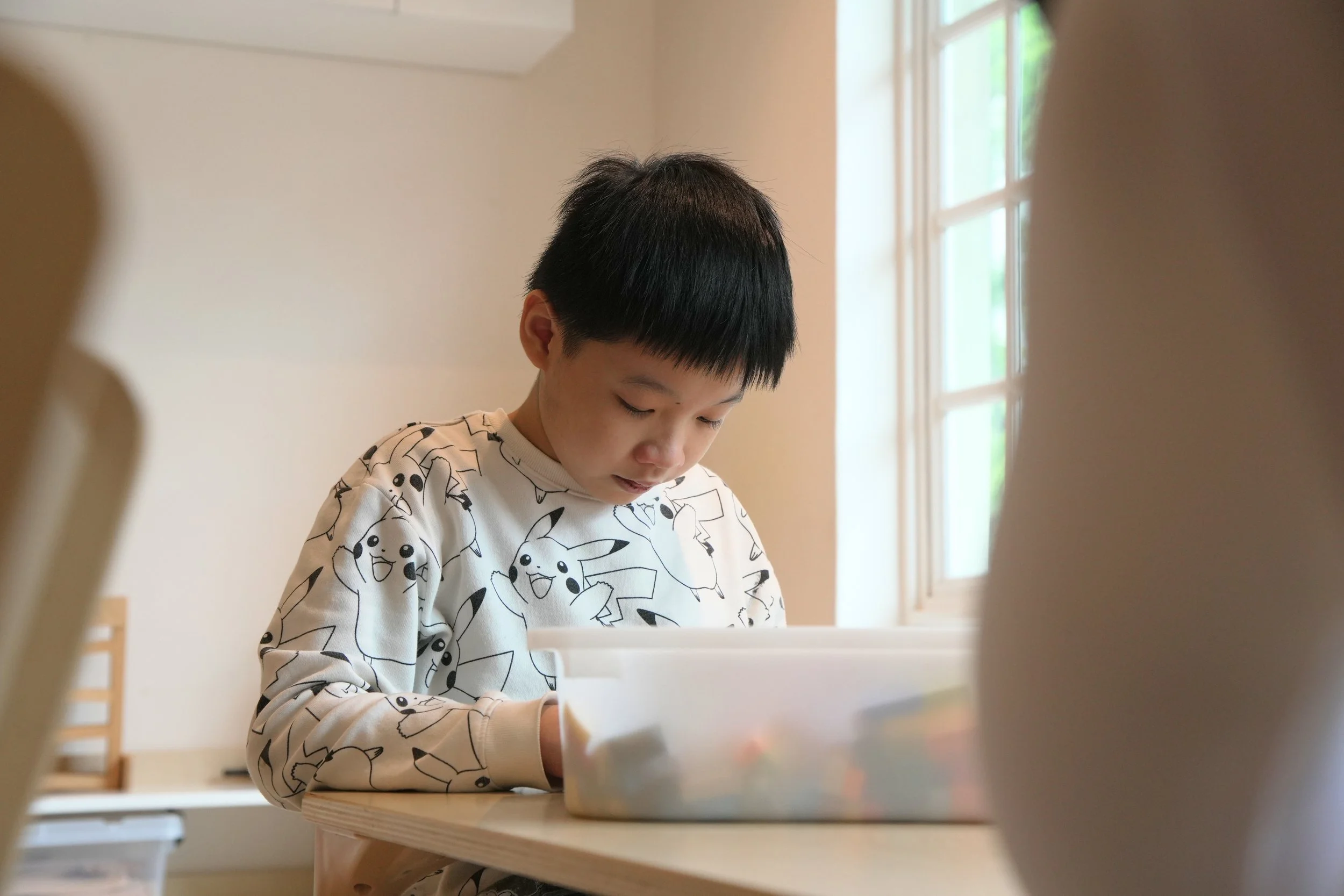
You're sitting in your paediatrician's office at KKH or Mount Elizabeth, and they say something like: "I'd like to refer your child for a developmental assessment" or "Have you considered early intervention?"
For many Singapore parents, this moment is a gut punch. Your mind races. What does this mean? Is something wrong? What do I do now? And — if you've done any Googling already — you've probably landed on the phrase "EIPIC waitlist" and felt your stomach drop.
This article is for you. Not the clinical version, not the government pamphlet version — the real, practical, Singapore-specific version of what early intervention actually is, how the system works, and what your options are when the waiting list feels impossibly long.
First: What Is Early Intervention, Actually?
Early intervention (EI) refers to targeted support provided to young children — typically from birth to age six — who are showing signs of developmental differences. These might include delays in speech and language, difficulties with social interaction, sensory sensitivities, motor skill challenges, or behaviours that suggest autism or ADHD.
The word "intervention" can sound alarming, but it simply means getting the right support in place during the window when a child's brain is most adaptable. It is not about fixing your child. It is about understanding how they experience the world and giving them the tools to navigate it.
The Singapore System: EIPIC, the Waitlist, and the Private Route
In Singapore, the government-subsidised pathway is the Early Intervention Programme for Infants and Children (EIPIC), overseen by the Early Childhood Development Agency (ECDA). EIPIC provides structured therapy and educational support for children with developmental needs, with fees heavily subsidised based on household income — ranging from as low as $5 to $730 per month.
The catch? The waitlist.
According to a CNA investigation published in November 2024, six out of ten parents interviewed waited between six months and 1.5 years for a subsidised EIPIC spot. The average wait time reported by ECDA was 7.5 months. One parent in the article described being told the estimated wait was "anywhere between six and 28 months."
As one mother in the article put it: "Every moment you wait makes a difference."
For families who can absorb the cost, private early intervention centres offer a significantly shorter wait — typically one to three months — but the fees reflect this. Private programmes can cost upwards of $3,000 to $4,000 per month, before additional therapy costs.
This is the reality that many Singapore families are navigating right now.
What Are the Early Signs That Warrant a Referral?
If you are reading this because you are concerned about your child's development, here are the signs that Singapore paediatricians and developmental specialists commonly flag as warranting further assessment. These are not a diagnosis — they are simply indicators that a professional evaluation would be worthwhile.
In children aged 18 months to 2 years: A child who is not yet pointing to objects of interest, not responding consistently to their name, or who has lost words or social skills they previously had (known as regression) should be assessed promptly. These are among the earliest and most significant red flags for autism spectrum disorder.
In children aged 2 to 3 years: Watch for difficulty following simple two-step instructions, very limited pretend play, extreme distress over minor changes in routine, or a strong preference for solitary play over interaction with peers or caregivers.
In children aged 3 to 5 years: Persistent difficulty being understood by unfamiliar adults, frequent and intense emotional meltdowns that are hard to de-escalate, significant clumsiness or avoidance of physical activities, and difficulty sustaining attention on any task — even preferred ones — are all worth discussing with a specialist.
It is worth noting that many of these signs overlap with typical developmental variation. A child who is "just a late talker" may need nothing more than some speech therapy. But the only way to know is to get a proper assessment.
The Expat Parent's Additional Layer of Complexity
If you are an expat family in Singapore, navigating this system comes with an added layer of complexity. EIPIC subsidies are available to Singapore citizens and permanent residents; expat children on Dependent Passes are generally not eligible for the subsidised rates, which means the private route is often the only option from the start.
Beyond cost, there is the question of continuity. If your family's posting ends and you relocate, will your child's progress transfer? What documentation will you need? These are questions worth raising early with any centre you consider.
What to Do Right Now
If you have just received a referral or are in the process of seeking one, here is a practical sequence of steps:
The first step is to get the referral in writing from your paediatrician, as this is required to apply for EIPIC. Apply for EIPIC immediately, even if you plan to start at a private centre in the meantime — the waitlist clock only starts when you submit the application. While you wait, research private centres that align with your child's specific profile. Not all private centres are the same; some specialise in autism, others in speech delays, and others take a more holistic, transdisciplinary approach.
Most importantly, trust your instincts. You know your child. If something feels off, it is always better to seek an assessment and be reassured than to wait and wonder.
How AltSchool Fits Into This Picture
At AltSchool International in River Valley, we work with children aged 3 to 8 who have a range of developmental needs — from autism and ADHD to speech delays, sensory processing differences, and global developmental delay.
We are a private centre, which means we are not on the EIPIC waitlist. Our intake process is typically much faster, and we work closely with families to understand their child's full profile before they start. What makes us different is our transdisciplinary model: our educators and therapists work together in the same classroom, integrating speech, occupational, and educational goals into natural daily routines — rather than pulling children out for isolated clinic sessions.
We were founded by a mother of two neurodivergent children. We understand this journey from the inside.
If you are at the beginning of this road and are not sure where to start, we are happy to have a conversation — no commitment required.